
Learn About Tree Pest Prevention Through Plant Healthcare
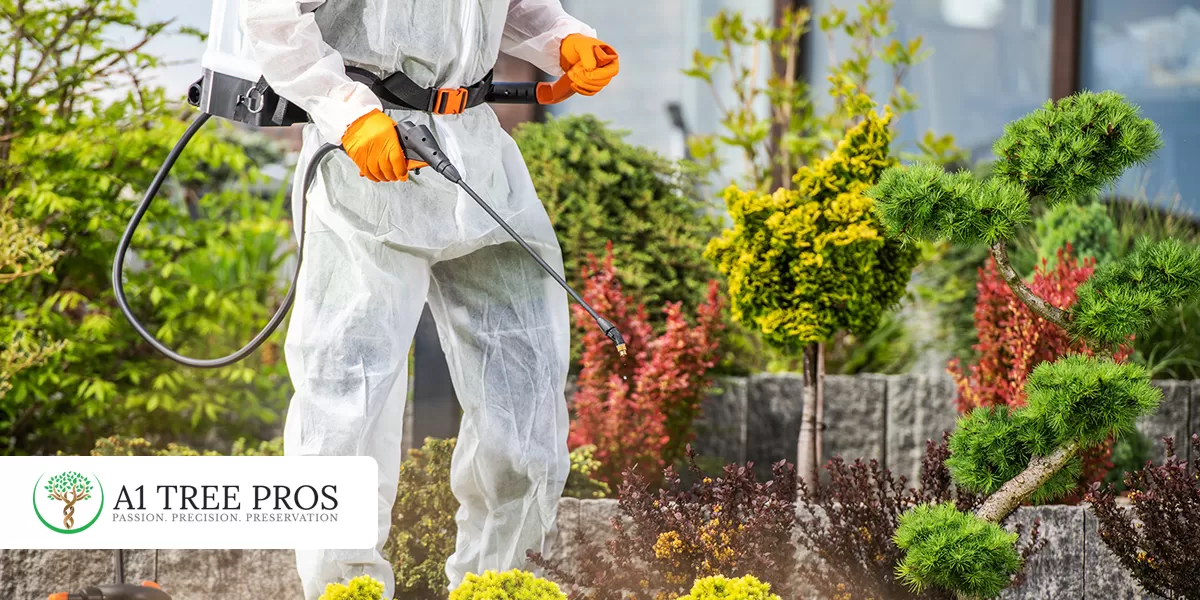
Learn About Tree Pest Prevention Through Plant Healthcare
Tree Pest Prevention Through Plant Healthcare
Happy winter my fine feathered friends — it’s “why did I move here?” cold out there. January greetings, everyone! Micayla C here with A1 Tree Pros .
If you live in Frederick, Potomac, or anywhere nearby, today’s topic could be a hot button. One thing is for certain-it’s one that causes a lot of frustration — and a lot of repeat phone calls for our team.
Let’s talk about pests.
Most homeowners assume pest problems come out of nowhere. One season everything looks fine, and the next, leaves are damaged, insects appear, or a tree just doesn’t seem right anymore.
What most people don’t realize is this:
Pests are usually the result, not the starting point.
That’s why tree pest prevention through plant health care is a much more effective than reacting after insects or disease have already taken hold.
Healthy Trees Don’t Invite Pests — Stressed Trees Do
Nature has a timeless knack for weeding out the weakest organisms. Insects and disease organisms are opportunistic. They don’t usually target strong, resilient trees first.
They target trees that are already under stress.
When a tree struggles with compacted soil, root disturbance, poor drainage, nutrient imbalance, or repeated environmental pressure, its natural defenses weaken. That makes it easier for pests to move in and harder for the tree to push them back out.
This is why tree pest prevention through plant health care focuses on strengthening the tree itself — not just killing what shows up later.
Why Reactive Spraying Often Misses the Point
A common call we get sounds like this:
“We have bugs — can you spray something?”
Sometimes targeted treatments are necessary. But spraying alone rarely solves the long-term problem.
Without addressing what caused the tree to become vulnerable in the first place, pest issues often:
Come back year after year
Spread to nearby trees and shrubs
Become harder to manage over time
Require stronger intervention later
This is why many homeowners feel stuck in a cycle of treatment without resolution.
Tree pest prevention through plant health care breaks that cycle by addressing stress before pests gain a foothold.
Stress Is the Gateway for Pest Problems
Trees under chronic stress actually emit chemical signals that insects can detect. It’s nature’s version of a distress flare.
In Frederick and Potomac, the most common stressors we see include:
Heavy clay or compacted soil
Root damage from construction or grading
Poor drainage around mature trees
Repeated drought stress
Excess mulch piled against the trunk
Restricted root zones in newer developments
When stress becomes long-term, a tree’s ability to defend itself declines — and pests take advantage.
This is why tree pest prevention through plant health care starts underground, not in the canopy.
How Plant Health Care Reduces Pest Pressure
Plant Health Care isn’t about blanket spraying or routine chemical use. In fact, the goal is often to reduce the need for those treatments over time.
A proper PHC approach may include:
Improving soil structure and oxygen availability
Supporting root function and nutrient uptake
Reducing environmental stress
Monitoring pest activity before outbreaks occur
Using targeted treatments only when truly needed
By supporting the tree’s natural defense systems, tree pest prevention through plant health care helps keep minor issues from becoming major ones.
Why Our Region Is Especially Vulnerable
Frederick and Potomac homeowners face a unique combination of challenges:
Ongoing development near established trees
Compacted soils from construction equipment
Changing drainage patterns
Warmer winters that allow pests to survive longer
Even trees that have thrived for decades can begin to struggle when their growing conditions change.
Without proactive care, pest issues often show up after stress has already done significant damage.
PHC helps trees adapt instead of slowly losing ground season after season.
Pests Are Often a Symptom — Not the Problem
One of the biggest mindset shifts homeowners make with PHC is this:
Instead of asking, “What’s attacking my tree?”
They start asking, “Why is my tree vulnerable?”
That shift changes everything.
Because when vulnerability is reduced, pest pressure often drops with it — sometimes dramatically.
This is why tree pest prevention through plant health care isn’t about fear or over-treatment. It’s about awareness and long-term stability.
Early Monitoring Makes All the Difference
Most pest problems don’t explode overnight. They start subtly:
Minor leaf damage
Slight discoloration
Reduced growth
Early seasonal changes
With regular monitoring, these signs can be addressed calmly — without urgency or panic.
Once infestations escalate, options narrow quickly and costs rise.
PHC gives homeowners time, clarity, and control instead of reaction and stress.
PHC Isn’t About Doing More — It’s About Doing Smarter
A common concern we hear is:
“Are you just going to sell me treatments I don’t need?”
Responsible Plant Health Care does the opposite.
Sometimes the recommendation is simply:
“This looks stable — let’s monitor.”
“No action needed right now.”
That honesty builds trust — and it keeps trees healthier in the long run.
PHC isn’t about doing more work.
It’s about doing the right work at the right time.
Early detection of root zone stress is critical. Our Plant Health Care services help monitor and treat trees before visible decline occurs.
Final Thoughts
Trees are as intelligent as they are beautiful! This is what makes me fall in love with them.
So the key takeaway here is simple and worth repeating-Pests don’t define the health of a tree — stress does.
The challenge is we as homeowners focus only on visible symptoms, and that approach already puts us behind the curve. When we focus on prevention, root health, and long-term stability, outcomes will change dramatically.
Tree pest prevention through plant health care helps trees defend themselves, adapt to environmental stress, and remain resilient year after year — especially in regions like Frederick and Potomac.
In the next PHC entry, we’ll explore how drought, heat, and seasonal extremes impact trees differently than most homeowners expect — and how early intervention can change long-term outcomes. Stay burrowed in my friends and here’s to Health & Hugs to Trees & Shrubs 🌳