
Early Warning Signs of Tree Stress Symptoms
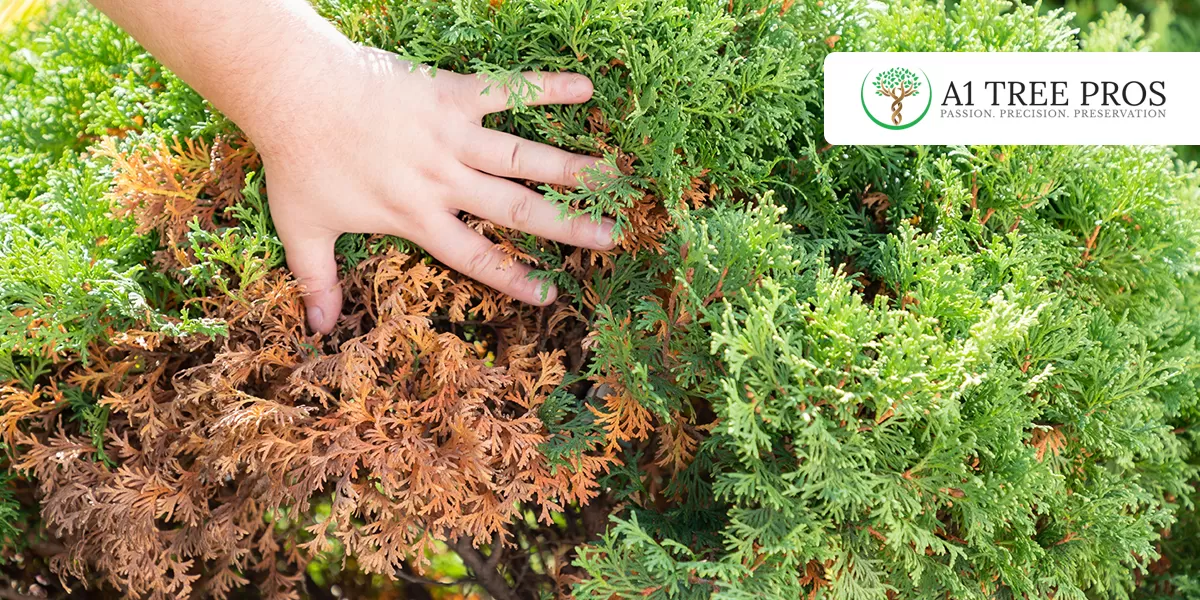
Early Warning Signs of Tree Stress Symptoms
Early Warning Signs a Tree Is Under Stress
Life moves at warp speed. Between bills, jobs, and family and all the distractions life brings, it’s no wonder any of us even have time to blink.
And it’s for that very reason that noticing a sick tree in its early stages is a hard ask for anyone. So here’s a little food for thought and a little shout out for all our fellow tree lovers out there……….
Understanding tree stress symptoms. Most tree problems don’t start with obvious damage.
They start slowly and quietly.
A tree looks mostly fine. It still has leaves. It’s still standing. Nothing feels urgent. But something is off — and it’s usually been off for longer than most homeowners realize.
As arborists working with homeowners throughout Potomac and Frederick, we often hear:
“It’s probably just the weather, right?”
Sometimes that’s true.
Often, it’s not.
Understanding tree stress symptoms early can make the difference between manageable care and expensive decisions later on.
Tree Stress Doesn’t Always Look Dramatic
One of the biggest challenges with tree stress is that it rarely announces itself loudly.
Trees under stress often:
Continue growing
Produce leaves
Appear stable from a distance
But internally, they may already be struggling to keep up with normal demands.
Stress builds quietly — and compounds over time.
Reduced Leaf Size or Sparse Canopy
One of the earliest warning signs we see is a change in leaf development.
Watch for:
Smaller leaves than previous years
Thin or uneven canopy coverage
Sections of the tree leafing out poorly
Leaves dropping earlier than usual
This is often the tree conserving energy because it can’t support full growth.
Delayed Leafing or Inconsistent Growth
If a tree is late to leaf out — or does so unevenly — it’s worth paying attention.
Common causes include:
Root stress
Drought stress
Past construction damage
Declining vascular function
A one-time delay may not be serious. Repeated delays usually are.
Premature Leaf Drop Isn’t Normal
Trees are programmed to hold onto their leaves for as long as possible.
If leaves are dropping:
Mid-summer
Earlier each year
Without a clear weather trigger
…it’s often a sign the tree is under stress and shedding load to survive.
Thinning or Dieback in the Upper Canopy
Stress often shows up first at the top of the tree.
Look for:
Small dead twigs
Branch tips that no longer produce leaves
Progressive thinning from the top down
This pattern usually indicates the tree can no longer support growth at its extremities.
Increased Pest or Disease Activity
Stressed trees are far more vulnerable to secondary issues. Nature is always 5 steps ahead
Insects and pathogens often target trees that are already weakened.
Signs include:
Unusual insect activity
Borer holes
Fungal growth
Leaf spotting or distortion
In many cases, pests are a symptom, not the original problem.
Soil and Root Stress Is a Major Driver
What’s happening below ground is often the root cause of visible stress.
Common contributors include:
Compacted soil
Poor drainage
Root damage from construction
Grade changes
Excessive mulch or soil piled against the trunk
Root stress limits water and nutrient uptake — and trees can’t compensate for that forever.
Environmental Stress Adds Up Over Time
Trees can tolerate short-term stress.
They struggle with repeated stress.
Factors like:
Heat waves
Drought
Improper pruning
Soil disturbance
Chemical exposure
…may not cause immediate failure, but they weaken a tree season after season.
Eventually, decline becomes visible.
Why Early Stress Detection Matters
Identifying tree stress symptoms early gives homeowners flexibility to work on proactive plant health care.
Early action may include:
Monitoring instead of removal
Corrective pruning
Soil improvement
Root-zone protection
Preventative treatments
Once stress turns into structural failure or safety risk, those options often disappear.
When It’s Time to Get a Professional Opinion
You don’t need to panic — but you also shouldn’t ignore patterns.
It’s worth consulting an arborist if:
Stress symptoms appear multiple years in a row
Decline is worsening
Large trees are near homes or walkways
You’re unsure what you’re seeing
Sometimes the outcome is reassurance. Other times, it’s early intervention that prevents much larger problems.
Both are valuable.
Final Thoughts
Trees don’t go from healthy to hazardous overnight. Just like anything else in this beautiful thing called life, it’s a subtle slow draw of ebbs and flows.
Stress builds gradually, often long before major symptoms appear. The earlier those tree stress symptoms are recognized, the more options homeowners usually have.
If you’re noticing changes in a tree on your property in Potomac, Frederick, or the surrounding areas, an experienced arborist can help you understand whether it’s normal fluctuation — or something that deserves attention.
It’s always easier to respond early than to react later. If you have questions about a specific tree or shrub on your property don’t hesitate to reach out. Heres to ‘Health & Hugs to Trees & Shrubs!”