
What Is Plant Health Care for Trees and Shrubs (And Why Most Homeowners Don’t Know They Need It)
What Is Plant Health Care for Trees and Shrubs (And Why Most Homeowners Don’t Know They Need It)
What Is Plant Health Care for Trees and Shrubs (And Why Most Homeowners Don’t Know They Need It)
Happy Monday! This is Micayla C A1 Tree Pros. Hope everyone is safely digging out after the almost foot of snow we got over the weekend! Looks like another one could be brewing in next few days as well!
JOY!! If you’re like me then you’re already over this weather!!! Let’s all collectively close our eyes and manifest Mother Nature to give us an early Spring! Ready? SET! GO!
Whether you’re in Frederick, Potomac, or anywhere in between, this is a conversation every homeowner eventually needs to have — even if they don’t realize it yet.
Most people think tree or shrub care starts when something looks wrong. A branch dies. Leaves thin out. A tree starts leaning. At that point, the question becomes, “Can it be fixed?”
The power of Plant Health Care flips that entire mindset.
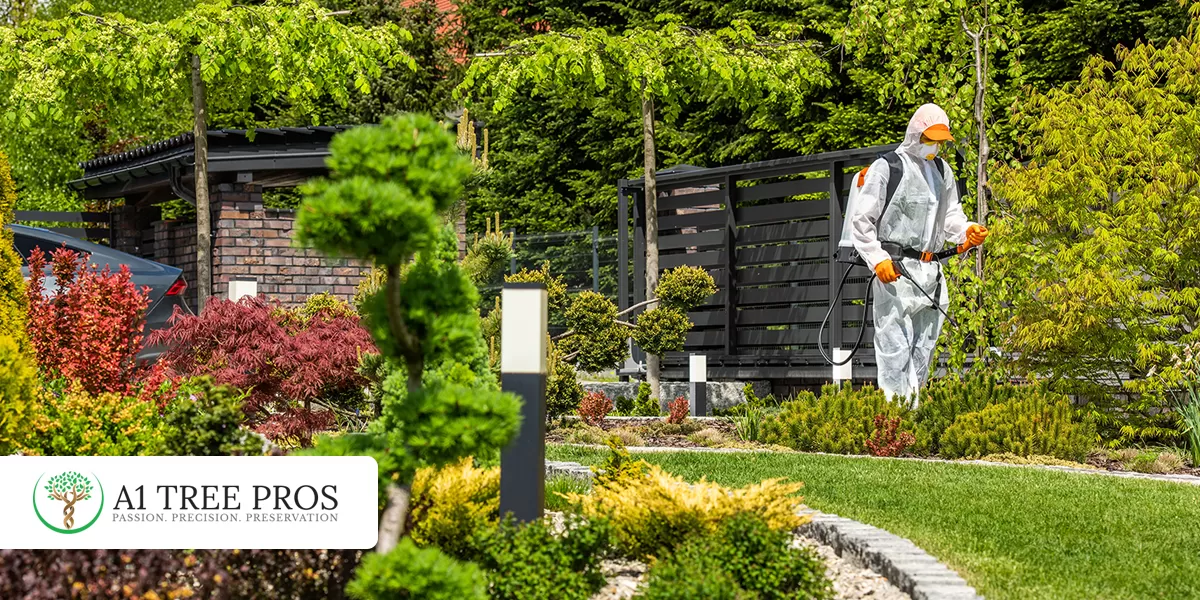
Instead of reacting to visible problems, Plant Health Care focuses on preventing decline before it shows up above ground. It’s a proactive, system-based approach that looks at what’s happening in the soil, the roots, and the overall environment long before stress becomes obvious.
That distinction matters more than most homeowners realize.
Tree Problems Don’t Start Where You See Them
When a tree or shrub begins to struggle, the symptoms usually appear in the canopy first — thinning leaves, dieback, poor growth, or discoloration.
But the cause is almost always somewhere else.
Most long-term tree and shrub issues begin below the surface, in areas homeowners rarely think about:
Compacted soil
Root disturbance from construction
Nutrient imbalance
Chronic drought stress
Repeated environmental pressure
By the time visible symptoms appear, the tree has often been compensating for years.
This is exactly where plant health care for trees and shrubs becomes valuable — because it addresses the cause, not just the symptom.
What Plant Health Care Actually Means
Plant Health Care (often shortened to PHC) is not a single treatment or product. It’s a long-term strategy built around observation, prevention, and targeted intervention.
A true PHC approach focuses on:
Soil health and structure
Root function and oxygen availability
Nutrient uptake efficiency
Stress reduction
Pest and disease prevention (not reaction)
Think of it as maintenance for living systems — not emergency repair.
Healthy plants don’t happen by accident. They’re supported intentionally over time.
Why This Matters in Frederick and Potomac
Frederick and Potomac have something in common that makes PHC especially important: challenging soil conditions.
Between heavy clay, compacted soils from development, rocky subsoils, and increasing construction activity, many trees are growing in less-than-ideal environments.
Even well-established trees can struggle when:
Roots are restricted
Oxygen exchange is limited
Water can’t move properly through soil
Nutrients are present but unavailable
Without intervention, trees slowly decline — not because they’re “old,” but because their growing conditions have changed.
This is where plant health care for trees and shrubs helps trees adapt instead of fail.
PHC Is About Longevity, Not Perfection
One of the biggest misconceptions homeowners have is that PHC is about making trees look perfect.
It’s not.
Plant Health Care is about stability, resilience, and longevity.
A tree doesn’t need to look flawless to be healthy. In fact, many mature trees carry minor defects and live long, productive lives. PHC helps ensure those imperfections don’t turn into structural or safety issues over time.
The goal isn’t cosmetic improvement — it’s sustainable health.
How PHC Differs From Traditional Tree Care
Traditional tree care often focuses on visible work:
Trimming
Pruning
Removal
Those services are sometimes necessary, but they’re only part of the picture.
Plant Health Care works behind the scenes, addressing:
Why growth slowed
Why pests became a problem
Why a tree stopped responding the way it used to
When PHC is in place, trimming becomes strategic instead of reactive. Removal becomes less frequent. Decisions feel calmer and more informed.
That’s a big shift for homeowners who are used to only calling when something goes wrong.
Early Action Changes Outcomes
One of the most important benefits of PHC is timing.
When stress is identified early, homeowners usually have options:
Soil improvement
Root-zone treatments
Nutrient correction
Monitoring instead of major intervention
Once decline becomes advanced, options shrink quickly.
That’s why proactive care almost always costs less over time — not because individual treatments are cheap, but because they prevent expensive emergencies later.
This proactive mindset is the foundation of plant health care for trees and shrubs, and it’s why more homeowners are starting to adopt it.
Plant Health Care Is Not a One-Time Fix
Trees and shrubs are living systems that respond to seasons, weather, and environmental change.
PHC works best when it’s ongoing, not one-and-done.
That doesn’t mean constant treatments. It means:
Regular observation
Periodic adjustments
Responding to changes early
Just like anything valuable, consistency matters more than intensity.
Final Thoughts
Plant health care for trees and shrubs is about emphasizing preventative monitoring . It’s about understanding how trees actually function — and supporting them before problems become visible, expensive, or dangerous.
In areas like Frederick and Potomac, where soil conditions and over development from environmental stress play a major role, PHC provides homeowners with clarity instead of guesswork.
Healthy trees don’t just happen. They’re supported.
And when you understand what’s happening below the surface, you can make smarter decisions above it. Please remember-Plant Health is a marathon not a sprint. It requires keeping an eye on things every so often! Taking this approach is a game changer. Here’s to “Health & Hugs to Trees & Shrubs.”
That’s why adopting a Plant Health Care for trees and shrubs program early can prevent costly issues and support long-term tree health.