
The Hidden Impact of Environmental Stress on Trees and Shrubs in Frederick and Potomac
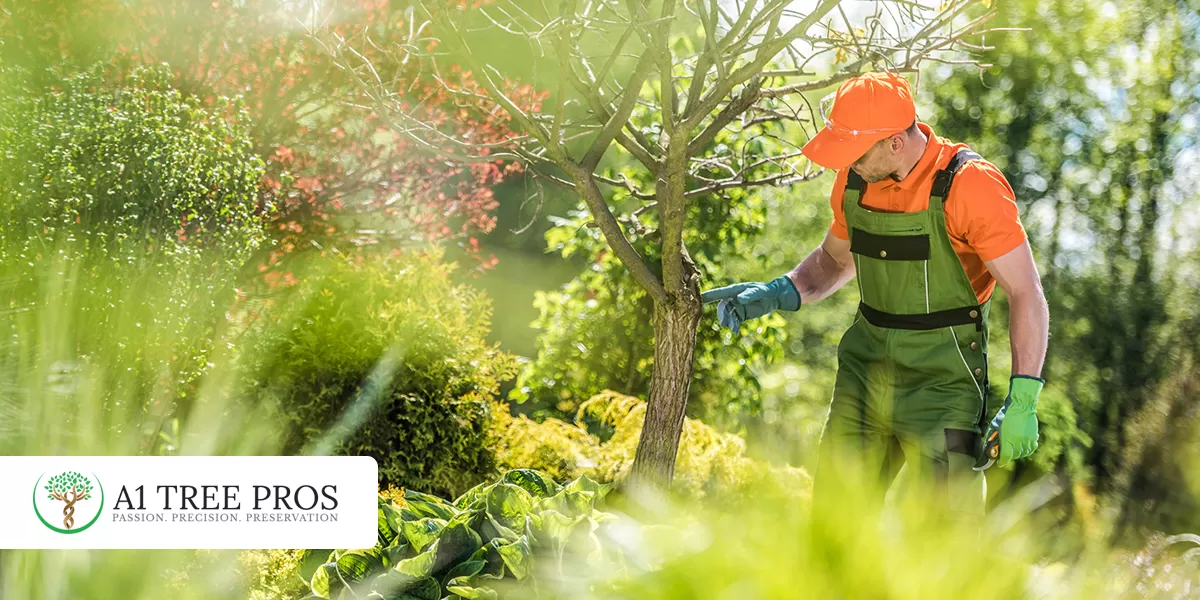
The Hidden Impact of Environmental Stress on Trees and Shrubs in Frederick and Potomac
The Hidden Impact of Environmental Stress on Trees and Shrubs in Frederick and Potomac
Happy whatever-zero-below-day-you’re-reading-this (is it Spring yet?)— Micayla C here with A1 Tree Pros. Today we’ll be talking about environmental stress — you know the sneaky kind that doesn’t show up overnight. It doesn’t announce itself loudly, and doesn’t care how healthy a tree used to be.
Environmental stress on trees and shrubs go hand in hand with plant health care. It is by far one of the biggest drivers of long-term decline we see in the surrounding areas— and it’s also one of the easiest to miss.
What Environmental Stress Really Means (And What It Doesn’t)
When most people hear “stress,” they think of extreme events:
A bad storm
A drought
A harsh winter
But environmental stress isn’t usually one dramatic moment. It’s the accumulation of pressure over time.
Environmental stress on trees and shrubs includes things like:
Repeated heat waves
Extended dry periods
Sudden temperature swings
Poor winter recovery
Changing microclimates around the home
Individually, these factors may not cause immediate damage. Together, over multiple seasons, they quietly weaken a plant’s ability to recover.
Why Trees Often “Look Fine” While Struggling
This is where homeowners understandably get confused.
A tree under environmental stress often:
Still produces leaves
Still flowers or buds
Still looks full from a distance
Internally, however, the tree is reallocating resources. It’s prioritizing survival over strength.
That means:
Slower root growth
Reduced energy reserves
Weaker structural response
Lower resistance to pests and disease
This is why environmental stress on trees and shrubs so often goes unnoticed until another issue appears — and gets blamed instead.
Frederick & Potomac: A Perfect Storm for Stress
Our region creates a unique challenge for trees.
In Frederick and Potomac, we commonly see:
Heavy clay soils that retain water too long (thanks a lot to all the large contractors who cut corners using crappy soil)
Rapid drainage changes from development
Increased heat reflection from pavement and homes
Compacted soils around mature trees
Warmer winters followed by sudden freezes
These conditions force trees to constantly adapt. Trees can adapt — but adaptation has limits.
When those limits are exceeded repeatedly, decline begins quietly.
Seasonal Stress Adds Up Faster Than You Think
One stressful season rarely kills a tree.
Five stressful seasons in a row? That’s different.
Environmental stress on trees and shrubs compounds when:
Drought follows a wet spring
Heat waves occur during peak growth
Winter injury limits spring recovery
Late frosts damage early growth
By the time symptoms become obvious, the tree may already be operating at a deficit.
Why Environmental Stress Opens the Door to Bigger Problems
Stress rarely acts alone.
Once a tree is weakened, it becomes:
More attractive to pests
Less capable of sealing wounds
Slower to recover from pruning
More likely to experience dieback
Less stable during storms
This is why many issues homeowners notice later — pests, decay, limb failure — are often secondary problems, not the original cause.
Environmental stress on trees and shrubs sets the stage.
How Plant Health Care Addresses Environmental Stress
Plant Health Care doesn’t try to “fight nature.” It works with it.
A PHC approach may involve:
Improving soil moisture balance
Supporting root recovery after stress
Reducing compaction to improve oxygen flow
Correcting nutrient uptake issues
Monitoring seasonal response patterns
The goal isn’t to eliminate stress — that’s impossible.
The goal is to increase resilience, so trees can absorb stress without declining.
This is where proactive PHC changes outcomes dramatically.
Why Waiting Makes Everything Harder
One of the most common things we hear is:
“It seemed fine until recently.”
In reality, environmental stress often started years earlier.
Early intervention allows for:
Smaller, targeted adjustments
Lower overall cost
Less urgency
Better long-term stability
Late intervention usually means fewer options and bigger decisions.
Addressing environmental stress is easier with our Plant Health Care services, designed to strengthen trees before problems appear.
Environmental Stress Is Normal — Decline Doesn’t Have to Be
All trees experience stress.
The difference between trees that recover and trees that decline usually comes down to:
Root health
Soil conditions
Energy reserves
Timing of support
That’s why environmental stress on trees and shrubs is such a critical part of Plant Health Care — and why ignoring it almost always leads to reactive decisions later.
Final Thoughts
Environmental stress doesn’t make headlines. It doesn’t snap trees in half overnight. It works quietly, patiently, and consistently.
In areas like Frederick and Potomac, where soil conditions and seasonal extremes are constantly shifting, understanding environmental stress on trees and shrubs gives homeowners a real advantage.
Plant Health Care in built around landscape is like running a marathon.
It’s about resilience.
And when trees are supported before stress becomes visible, outcomes change — often dramatically.
Are you starting to notice a theme here? You guessed it boys and girls….prevention means having a steady routine of monitoring in place (MICROPHONE DROP!!!)
In the next PHC entry, we’ll dive into how drought and water stress affect trees very differently than most homeowners expect — and why overwatering can be just as damaging as drought.
Here’s to Health & Hugs to Trees & Shrubs 🌳