
Common Fungal Diseases in Central Maryland Shrubs
Common Fungal Diseases in Central Maryland Shrubs
Common Fungal Diseases in Central Maryland Shrubs
Happy Valentine’s Day Eve 💚
Let’s jump right in while the water is warm shall we?
If trees are the anchors of the landscape, shrubs are the steady understory that quietly make everything feel complete.
Boxwoods frame foundations. Hydrangeas soften corners. Hollies hold winter structure. Rhododendrons explode in spring.
And if shrubs could talk, many of them would probably say:
“I promise I’m not dying… I’m just stressed.”
Here in Central Maryland……with our humid summers, wet springs, and heavy clay soils…..shrubs face constant fungal pressure. Understanding common fungal diseases in Maryland shrubs helps separate what’s cosmetic versus what needs attention.
It’s important to remember that not every leaf spot is a crisis. But some patterns are worth watching.
Let’s walk through the most frequent fungal issues we see locally — and what they really mean.
Why Shrubs Experience Fungal Pressure
Shrubs often sit in tighter planting beds than trees. They’re closer to foundations. Airflow is limited. Mulch may be piled too deeply (mulch volcanoes are a threat). Irrigation sometimes runs too long.
Add humidity and rainfall, and you have an ideal scenario for increase in fungal conditions.
Leaves remain wet
Air circulation is limited
Soil stays saturated
Plants are stressed
The key theme you’ve seen throughout these articles still applies:
Healthy shrubs tolerate minor fungal presence. Stressed shrubs do not.
1️⃣ Boxwood Blight
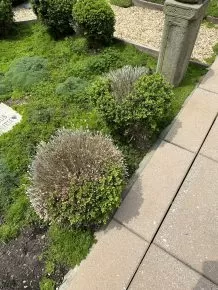
(Boxwood)
No conversation about shrubs in our region is complete without boxwood blight.
Symptoms include:
Rapid leaf drop
Brown leaf spots with dark borders
Black streaking on stems
Boxwood blight spreads quickly under humid conditions and can move through dense plantings.
However, not every declining boxwood has blight.
Boxwoods also struggle from:
Root stress
Poor drainage
Winter burn
Volutella blight (a different fungal issue)
Correct identification matters.
In landscapes where boxwoods are tightly spaced and airflow is restricted, fungal pressure increases dramatically.
2️⃣ Volutella Blight
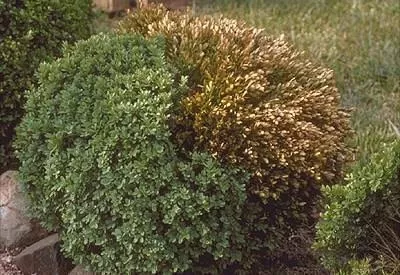
(Boxwood)
Often confused with boxwood blight, volutella tends to affect already stressed plants.
It may show:
Tan or salmon-colored fungal growth
Thinning interior foliage
Branch dieback
Volutella commonly appears when boxwoods are:
Over-pruned
Compacted at the root zone
Growing in poorly drained soil
It’s a reminder that many fungal diseases are opportunistic.
3️⃣ Powdery Mildew
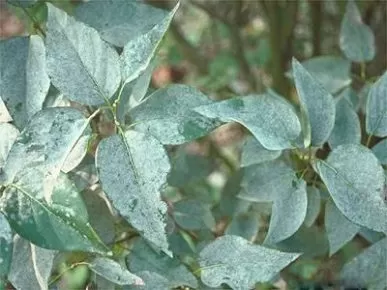
(Crape Myrtle, Dogwood Shrubs, Euonymus, Lilac)
Powdery mildew appears as a white, dusty coating on leaves.
It thrives in:
Humid air
Shaded conditions
Dense plantings
For many mature shrubs, it’s cosmetic.
But repeated mildew year after year may signal limited airflow or chronic stress.
Pruning for structure and improving spacing often reduces pressure more effectively than blanket spraying.
4️⃣ Leaf Spot Diseases
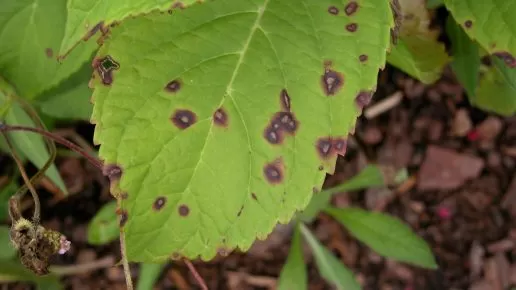
(Hydrangea, Holly, Photinia, Cherry Laurel)
Leaf spot fungi are extremely common in Central Maryland shrubs.
Symptoms include:
Brown or black spots
Yellow halos
Premature leaf drop
In hydrangeas especially, leaf spot can look dramatic late in the season.
Most cases are cosmetic for established shrubs. However, repeated early defoliation weakens plants over time.
When leaf spot appears alongside poor growth or thinning, it’s worth evaluating soil and drainage conditions.
5️⃣ Root Rot
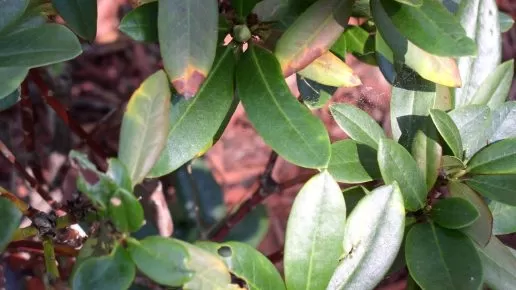
(Rhododendron, Azalea, Boxwood, Holly)
Root rot fungi like Phytophthora thrive in poorly drained soils.
Shrubs planted too deeply or in compacted clay are especially vulnerable.
Symptoms may include:
Wilting despite moist soil
Yellowing leaves
Gradual dieback
Mushrooms or fungal growth near the base
Root rot is rarely sudden. It develops slowly as oxygen levels in soil decrease and roots lose function.
This is one of the more serious fungal issues because it affects structural stability and nutrient uptake.
Cosmetic vs Concerning
Many of the common fungal diseases in Central Maryland shrubs are cosmetic — especially when they appear late in the growing season.
The bigger concern arises when you see:
Repeated early defoliation
Progressive dieback
Thinning year after year
Poor recovery in spring
Shrubs decline gradually. The signs are often subtle at first.
Why Shrubs Are Especially Vulnerable
Compared to trees, shrubs:
Have shallower root systems
Experience more soil compaction
Sit in tighter planting beds
Compete more intensely for moisture
That makes them slightly more sensitive to poor drainage and overwatering.
When fungal diseases show up, they often highlight underlying stress patterns.
Monitoring Shrubs Over Time
It’s easy to replace a shrub. That’s often the instinct.
But long-term landscapes benefit from understanding why decline occurred.
Monitoring helps answer:
Is this seasonal or recurring?
Has growth slowed over multiple years?
Is drainage consistent?
Is mulch depth appropriate?
Understanding common fungal diseases in Central Maryland shrubs becomes much more useful when paired with observation and context.
Looking Ahead
Fungal presence in shrubs is quite common in our region. Humidity and rainfall ensure that.
Diagnosing disease in trees and shrubs and treating them can help tolerate normal environmental pressure without progressing into decline.
Next, we’ll shift from fungal issues to common insect pests affecting Central Maryland trees and shrubs, and how stress plays a role there as well.
A Note from Me
— Micayla
Shrubs are often the quiet backbone of a landscape. When they start to struggle, it’s usually not random.
A little attention to soil, spacing, and stress patterns often makes a bigger difference than reacting to every spot or symptom.