
Why Trees Decline Slowly — And Then Fail Suddenly
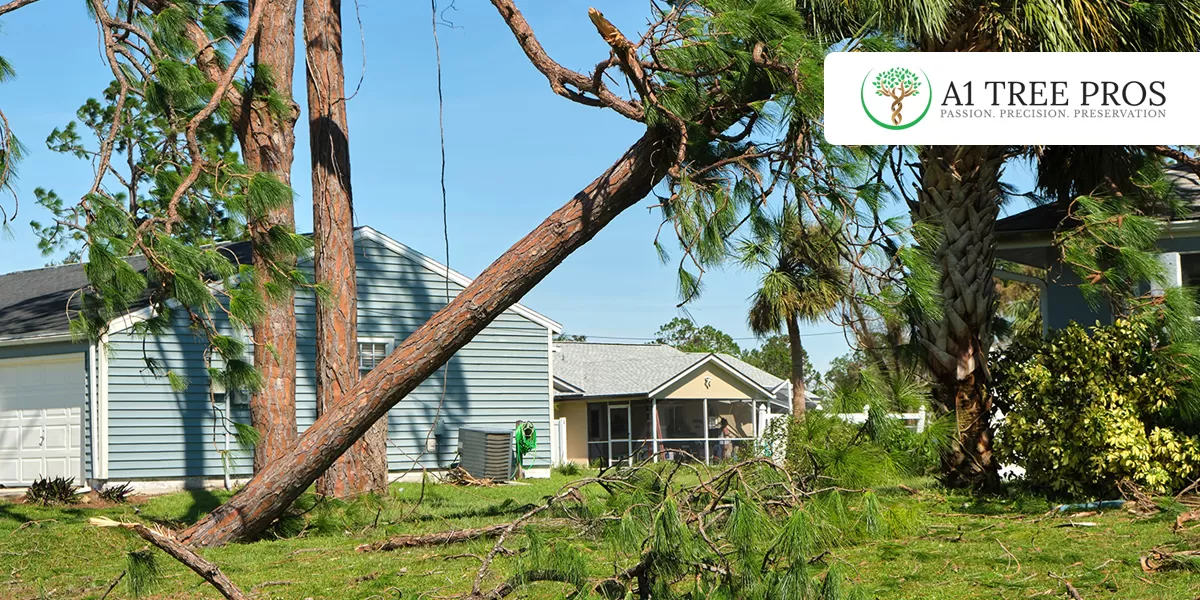
Why Trees Decline Slowly — And Then Fail Suddenly
Top of the morning to all the lovely tree enthusiasts across the world. Micayla C here from A1 Tree Pros to break down why trees decline slowly. Today we will wrap up our tree safety series to bring our 5 part segment full circle.
Ready? 3-2-1……ignition…..
One of the most common things homeowners say after a tree failure is:
“It just happened out of nowhere.”
A limb drops.
A tree uproots.
Damage happens fast.
We’d all feel a little more at ease if tree damage truly happened out of the blue. In reality, tree failure is rarely sudden. Even when it feels abrupt in the moment, it’s usually the final stage of a long, quiet decline that’s been developing for years.
Understanding why trees decline slowly — and then fail suddenly — helps homeowners make sense of what they’re seeing and, more importantly, recognize when action still matters.
Trees Have Mastered the Art of Hiding Stress
They are incredibly resilient living systems.
When something goes wrong — drought, root damage, poor soil, improper pruning — a tree doesn’t immediately shut down. Instead, it compensates.
It reroutes energy.
It sacrifices weaker growth.
It prioritizes survival over structure.
From the outside, the tree may still:
Produce leaves/foliage
Appear stable
Look “good enough” year after year
Internally, however, the stress is accumulating.
Decline Is a Process, Not One Event
Tree decline rarely has a single cause.
More often, it’s the result of compounding stress over time, such as:
Repeated drought or heat stress
Soil compaction
Root disturbance
Poor pruning practices
Construction damage
Pest or disease pressure
Each factor alone might be manageable. Together, they slowly weaken the tree’s ability to respond.
Decline doesn’t rush.
It waits.
Structural Weakness Develops Quietly
As stress accumulates, trees begin to lose structural strength.
This can include:
Weak branch unions developing over time
Roots losing anchorage without visible symptoms
Vascular systems becoming less efficient
Because much of this happens inside the tree, homeowners often don’t see it until symptoms reach the canopy or trunk.
By then, the foundation has already changed.
Why Failure Often Looks Sudden
Failure usually occurs when a stressed tree encounters a trigger.
Common triggers include:
High winds
Heavy rain
Saturated soil
Snow or ice accumulation
At that point, the tree isn’t failing because of the storm alone.
It’s failing because its ability to withstand stress has already been compromised.
The storm simply exposes what was already there.
Tipping Points Are Easy to Miss
One of the hardest things about tree decline is recognizing when a tree crosses from “managing stress” to “approaching failure.”
The outward changes are often subtle:
Slight thinning
Minor dieback
Small cracks or cavities
Gradual lean
None of these feel urgent on their own. But together, they tell a story.
That’s why trees often appear stable right up until they aren’t.
Why Early Evaluation Changes Outcomes
When decline is identified early, homeowners have options.
Early-stage decline may allow for:
Stress reduction strategies
Soil and root-zone improvement
Monitoring rather than removal
Long-term planning
Once structural integrity is lost, options narrow quickly.
The goal isn’t perfection — it’s awareness and timing.
This Is Why Trees Don’t Give Second Chances
Trees don’t warn us loudly before they fail.
They warn us quietly, over years, through small changes that are easy to overlook in daily life.
That’s not because homeowners are careless — it’s because life is busy, and trees are patient.
But once the balance tips, failure doesn’t negotiate.
How This Connects to Everything Else
This slow-to-sudden pattern is why:
Early stress symptoms matter
“Can it be saved?” depends on timing
Safety evaluations aren’t fear-based
Preventative care exists in the first place
Tree decline isn’t about panic.
It’s about understanding the process.
Final Thoughts
Trees rarely fail without reason. They fail after years of adjustment, stress, and quiet compromise.
Understanding the age old question why do trees decline slowly — and then fail suddenly helps homeowners move from reaction to prevention, from urgency to planning.
If you’re a homeowner in Potomac, Frederick, or the surrounding areas and are noticing gradual changes in a tree on your property, an experienced arborist can help determine whether those changes are normal, manageable, or something that deserves attention now.
With trees, timing isn’t everything —
but it’s as close as it gets.