
Common Tree Problems in Frederick, Maryland
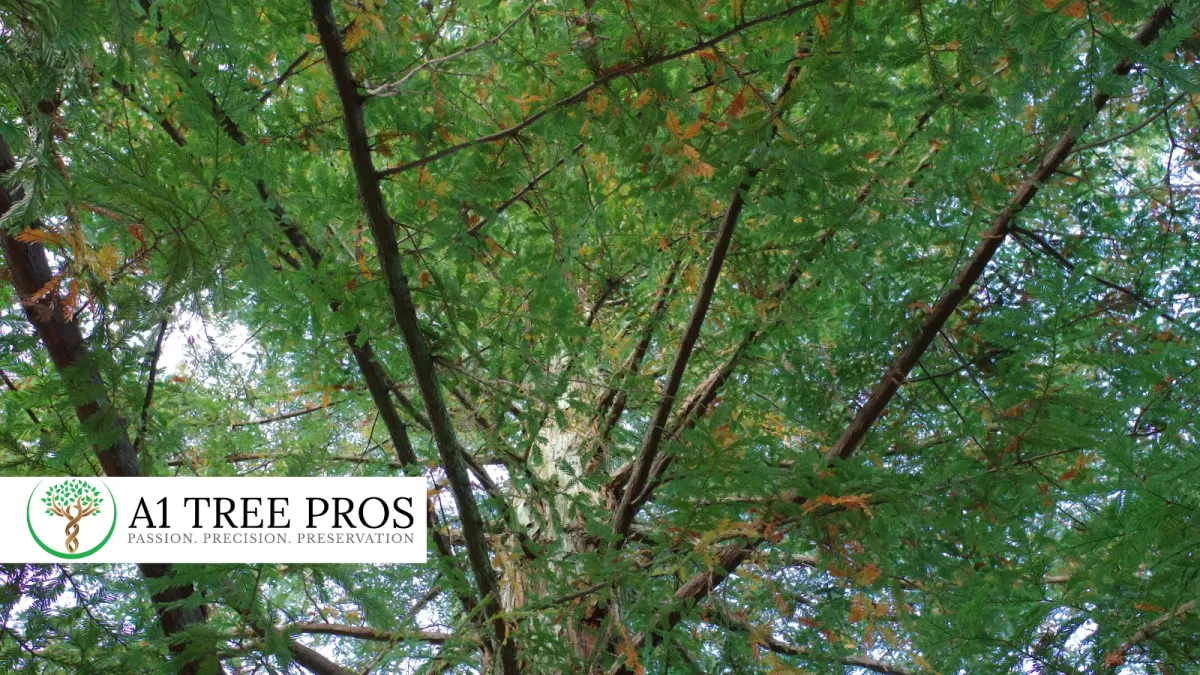
Common Tree Problems in Frederick, Maryland
Common Tree Problems in Frederick, Maryland
By Micayla, A1 Tree Pros
Frederick’s landscapes are changing quickly (thats the understatement of the year)!
Even driving around it’s hard not to notice the amount of development taking place. It boggles the mind.
Mature neighborhoods near Baker Park and older parts of downtown contain beautiful (almost borderline) historic oaks, maples, and tulip poplars that have been growing for generations. Newer developments in areas along Gas House Pike or along Monocacy Blvd. are filled with younger trees planted into compacted clay soils during construction.
Most tree decline we see in and around Frederick develops gradually, not suddenly.
It’s different settings with the same pattern: Understanding the common tree problems in Frederick, Maryland starts with recognizing how soil, development, weather patterns, and planting practices interact over time.
Clay Soil and Compaction
Frederick County’s native soils tend to be clay-heavy. Matter of fact let’s give a BIG shout out to all the corner cutting contractors out there who pinch a few dollars at the expense of local trees and shrubs
Clay holds nutrients well, but also:
Compacts easily
Drains very slowly
Restricts oxygen movement
When soil becomes compacted — from foot traffic, equipment, or construction — roots struggle to expand.
Symptoms above ground may include:
Smaller leaves
Slower annual growth
Thinning canopy
Increased pest or fungal pressure
In many cases, what appears to be disease is actually soil limitation.
Construction-Related Root Disturbance
Frederick continues to expand. New construction is constant.
During development, trees often experience:
Grade changes
Root cutting
Soil compaction from machinery
Altered drainage
Trees rarely die immediately from construction damage. Instead, decline often appears one to three years later.
Homeowners are surprised when a tree that “looked fine” begins thinning — but the stress event occurred years prior.
Construction-related stress remains one of the most frequent common tree problems in Frederick, Maryland.
Improper Planting Depth
In newer communities, improper planting depth is extremely common.
Trees planted too deeply may develop:
Girdling roots
Poor oxygen exchange
Trunk flare burial
Reduced stability
The issue often goes unnoticed until:
Growth slows
Canopy density decreases
The tree becomes more susceptible to pests or fungi
Correct installation at planting is critical. Unfortunately, many trees are installed quickly during development phases without long-term monitoring.
Drainage Imbalance
Frederick weather patterns can swing dramatically.
We often experience:
Extended dry periods
Sudden heavy rainfall
Saturated soils in spring
Dry, compacted soil in late summer
Roots adapted to one extreme may struggle when conditions change quickly.
Symptoms include:
Early fall color
Leaf scorch
Reduced vigor
Dieback in upper canopy
Repeated cycles of drought followed by saturation compound stress over time.
Fungal Leaf Pressure in Wet Springs
Cool, wet spring weather in Frederick frequently encourages:
Anthracnose on sycamores and maples
Leaf spots on dogwoods
Powdery mildew in shaded areas
In healthy trees, most of these fungal issues are cosmetic.
However, when repeated over multiple years — especially in trees already stressed by soil or compaction — recovery slows and decline accelerates.
Fungal symptoms often highlight underlying stress rather than act as primary causes.
Insect Pressure on Stressed Trees
Scale
Borers
Emerald Ash Borer
Aphids
are common throughout Frederick.
In most cases, insects are secondary.
Healthy trees tolerate moderate feeding. Trees under chronic stress decline more quickly when insect pressure is added.
The insect is visible — but the root or soil limitation is often the bigger issue.
Limited Soil Volume in Urban Settings
In denser areas of Frederick, especially near sidewalks and streets, trees grow in restricted root zones.
Limited soil volume leads to:
Slower growth
Earlier decline
Increased sensitivity to drought
Higher susceptibility to pests
Urban trees often operate with reduced resilience for years before symptoms become obvious.
Patterns Over Time
The most important theme across all common tree problems in Frederick, Maryland is accumulation.
Rarely is there a single catastrophic cause.
Instead, decline develops through layers:
Soil compaction
Environmental stress
Construction disturbance
Fungal pressure
Insect activity
By the time canopy thinning becomes obvious, stress has often been building quietly for several seasons.
When to Look Closer
Further evaluation is recommended when:
Thinning increases year after year
Growth slows noticeably
Branch dieback progresses
Construction occurred nearby
Leaf loss becomes repeated
Early identification allows for more management options.
Waiting until structural decline becomes advanced limits flexibility.
Long-Term Tree Stability in Frederick
Supporting tree health locally and treating the diseases behind these problems requires attention to:
Soil structure
Root protection
Proper planting depth
Drainage consistency
Monitoring seasonal patterns
Addressing foundational conditions produces more predictable outcomes than reacting to isolated symptoms.
Frederick’s landscapes are diverse — but the stress patterns affecting trees are surprisingly consistent.
A Note from Me
— Micayla
Most tree problems I see in Frederick aren’t part of some grand complicated mystery. It’s a slow process…..
So the key is to pay attention to the basics like the soil, the root health, and the construction history early. Trees follow predictable measurable patterns and when we work together to understand those patterns our lovely trees will remain stable much longer. Thanks again for reading and as always here’s to Health & Hugs to Trees & Shrubs.