
Common Fungal Diseases in Central Maryland Trees
Common Fungal Diseases in Central Maryland Trees
Common Fungal Diseases in Central Maryland Trees
By Micayla, A1 Tree Pros
Happy Valentine’s Day weekend! 💚
This time of year is all about love…..flowers, chocolates, hearts everywhere. Well trees need love too.
If they could send you a V Day card what might it read? How about……
“Please ease up on the stress… and maybe check my roots.”
So while we’re celebrating, our trees are quietly preparing for another growing season. And here in Central Maryland — with humid summers, heavy spring rains, and clay-heavy soils — fungal pressure is simply part of the landscape. It comes with the territory.
Understanding common fungal diseases in Central Maryland trees doesn’t mean panicking over every leaf spot. It means knowing what’s harmless, what’s seasonal, and what signals deeper stress.
Let’s walk through the most frequent fungal issues we see locally — and what they’re actually telling us.
Why Fungal Diseases Are So Common Here
Our regional climate creates ideal conditions for fungi:
High humidity in late spring and summer
Frequent rain events
Warm nighttime temperatures
Dense landscapes with limited airflow
Fungi thrive in moisture. When leaves remain wet for extended periods, spores have time to germinate and spread.
But here’s the key: fungi are almost always present in the environment. The difference between a minor cosmetic issue and a serious problem usually comes down to tree vigor.
Healthy trees tolerate low-level fungal exposure surprisingly well.
That’s why conversations about common fungal diseases in Central Maryland trees always come back to overall tree health, root conditions, and long-term stress patterns.
1️⃣ Anthracnose
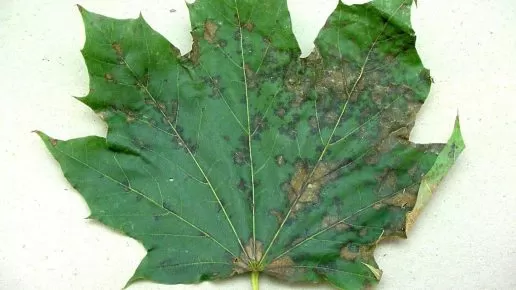
(Maples, Sycamores, Dogwoods, Oaks)
Anthracnose is one of the most recognizable fungal issues in our area.
It typically shows up as:
Irregular brown blotches on leaves
Leaf curling or distortion
Premature leaf drop in spring
On sycamores especially, it can look dramatic. Entire trees may appear thin or delayed compared to others nearby.
The good news? In most cases, anthracnose is cosmetic.
It thrives in cool, wet spring weather. Once temperatures rise and conditions dry out, trees often push a second flush of growth and recover well.
Concern increases when:
Defoliation happens repeatedly year after year
Branch dieback becomes visible
The tree is already stressed
Anthracnose rarely kills healthy trees. But when layered on top of existing stress, it becomes more impactful.
2️⃣ Powdery Mildew
(Maples, Dogwoods, Redbuds)
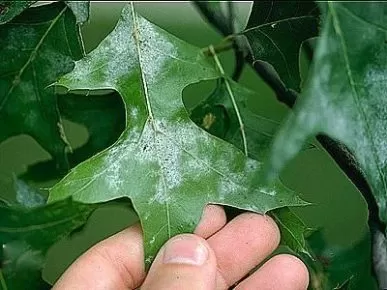
Powdery mildew looks like someone dusted the leaves with flour.
It commonly appears:
In late summer
In shaded areas
Where airflow is limited
Unlike many fungi, powdery mildew doesn’t require standing water. It thrives in humid air.
For mature trees, it’s usually cosmetic. Photosynthesis may be slightly reduced, but established trees typically tolerate it.
Young or newly planted trees, however, may struggle more because their energy reserves are still developing.
3️⃣Verticillium Wilt
(Maples, Redbuds, Smoke Trees)
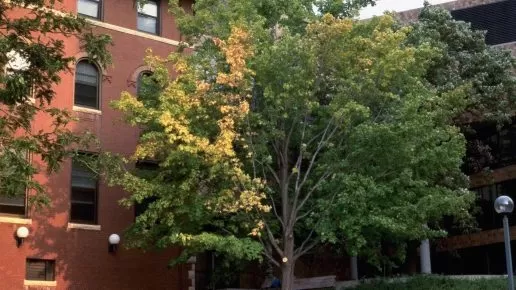
Verticillium wilt is more serious.
This soil-borne fungus enters through the roots and disrupts water transport within the tree.
Symptoms may include:
Sudden branch dieback
One-sided canopy thinning
Wilting leaves in warm weather
Discolored streaking inside branches
Unlike leaf-based fungal issues, verticillium affects vascular tissue. Once established, recovery can be difficult.
Trees with strong root systems may compartmentalize the infection and survive for years. Trees already weakened by stress may decline more quickly.
This is why understanding common fungal diseases in Central Maryland trees requires distinguishing between surface symptoms and systemic infections.
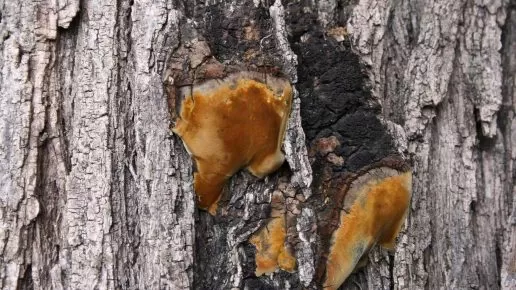
4️⃣ Root Rot
(Various Species)
Root rot fungi, including Phytophthora and Armillaria, are closely tied to drainage and soil conditions.
They tend to develop when:
Soil remains saturated
Drainage is poor
Roots are damaged
Soil oxygen levels are low
Above-ground symptoms often include:
Thinning canopy
Reduced growth
Increased susceptibility to other issues
Mushrooms near the base of the tree
Root rot usually progresses gradually. In many cases, fungal presence is secondary to poor soil conditions.
Improving root-zone health often matters more than simply addressing the fungus itself.
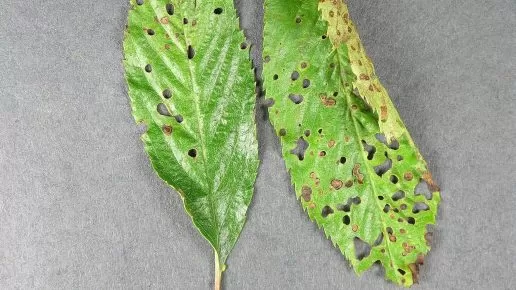
5️⃣ Leaf Spot Diseases
(Various Hardwoods)
Leaf spot fungi are extremely common in our region.
They create:
Circular brown or black spots
Yellow halos
Early leaf drop
For mature trees, most leaf spot diseases are cosmetic.
The concern grows when:
Early leaf drop repeats annually
Growth declines over multiple seasons
Canopy density decreases steadily
When those patterns appear, the fungal presence may be highlighting deeper stress.
Cosmetic vs Structural Fungal Issues
Not all fungal problems are equally dangerous.
Many of the common fungal diseases in Central Maryland trees are surface-level issues that healthy trees tolerate well.
Red flags include:
Repeated defoliation
Progressive dieback
Internal vascular symptoms
Root-zone decline
When fungal symptoms appear alongside declining vigor, that’s when further evaluation becomes important.
Why Stress Changes the Outcome
Fungi are opportunistic.
A strong oak in well-drained soil may tolerate anthracnose for years without measurable decline.
A stressed oak in compacted clay soil with root disturbance may not.
This is why two trees on the same property can experience identical fungal exposure and have completely different outcomes.
The fungus alone is rarely the deciding factor. The tree’s resilience is.
Monitoring Makes the Difference
When fungal symptoms are viewed in isolation, they often feel alarming.
When viewed over time, patterns emerge.
Monitoring helps answer:
Is this recurring?
Is growth slowing year after year?
Is canopy thinning gradual or sudden?
Are root conditions stable?
Understanding common fungal diseases in Central Maryland trees becomes far more useful when paired with long-term observation and context.
Looking Ahead
Fungi are part of our ecosystem. They aren’t going away — and they don’t need to.
The goal is identifying and treating common tree diseases. Supporting trees so they can tolerate normal environmental pressure without slipping into decline.
Next, we’ll look at common fungal diseases in Central Maryland shrubs, including boxwood blight and hydrangea leaf spot — and how shrub structure changes the equation slightly.
A Note from Me
— Micayla
Tree care isn’t about reacting dramatically to every spot or symptom. It’s about understanding cycles and patterns.
Sometimes the most helpful thing we can do for our trees — especially this time of year…..is to pay attention to what they’ve been quietly telling us all along. Here’s to Health & Hugs to Trees & Shrubs.