Need Expert Tree Care in Frederick, MD?
Call Us Today at

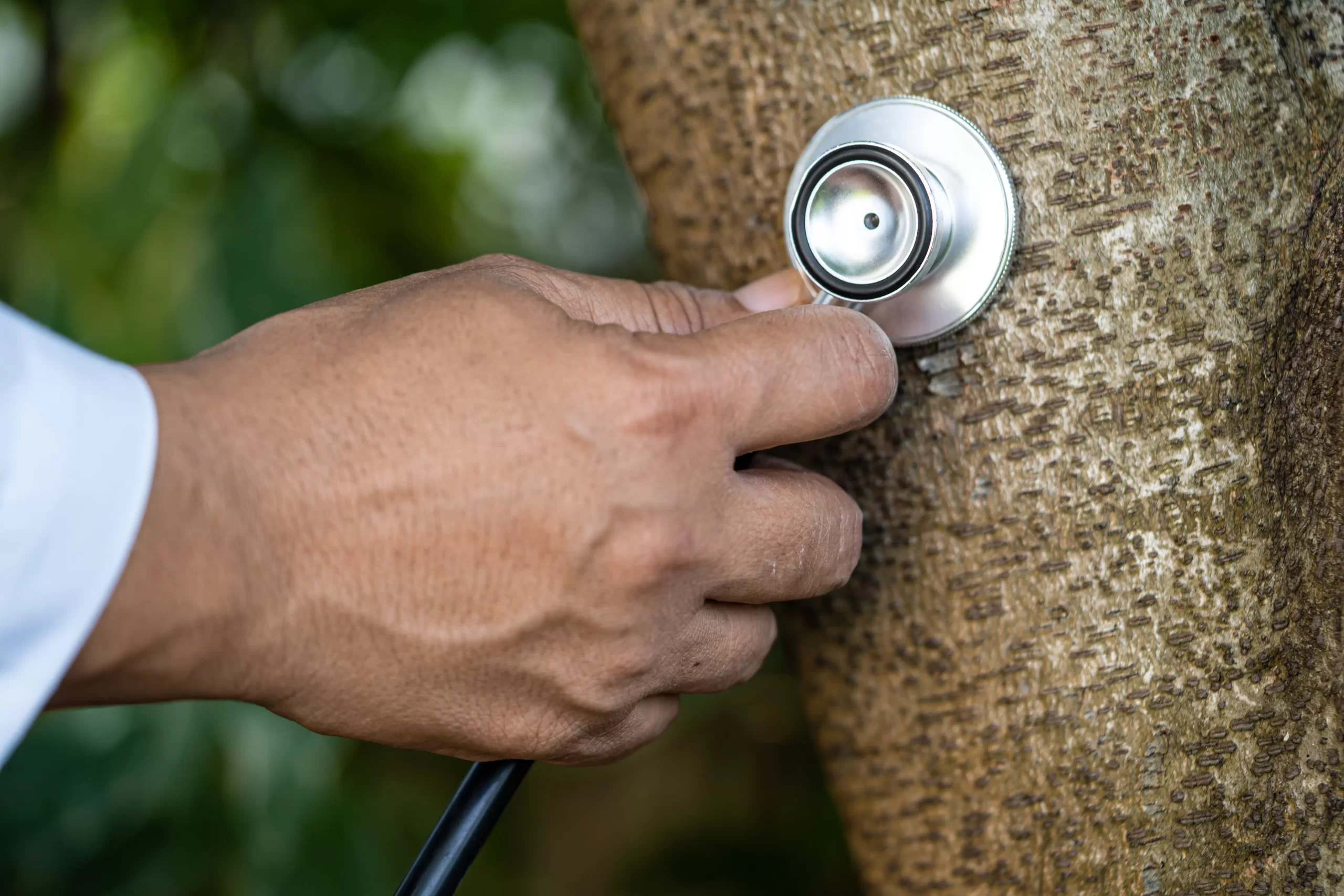
Professional plant health care services focused on protecting trees and shrubs from environmental stress, decline, and unnecessary loss.
Mature landscapes rarely decline from one single issue alone. Most problems develop gradually through environmental stress, soil imbalance, root competition, moisture inconsistency, compaction, insect pressure, and years of accumulated strain that slowly weaken the natural defense systems of trees and shrubs.
At A1 Tree Pros, our approach to Plant Health Care is centered around observation, monitoring, preservation, and thoughtful intervention rather than excessive treatment programs or unnecessary chemical applications. Every property responds differently to changing environmental conditions, and long-term success often depends on identifying underlying stress patterns before visible decline becomes severe.
Many ornamental and shade trees throughout the area are operating under significant stress long before symptoms become obvious to the property owner. Canopy thinning, premature leaf drop, sparse foliage density, fungal pressure, dieback, and slowed seasonal growth are often indicators that the root system and surrounding soil environment are struggling to properly support the tree.
Our goal is not simply to treat symptoms. Our focus is understanding why the landscape is underperforming in the first place and developing a stewardship strategy that supports long-term health, resilience, and structural stability.
Many residential properties contain mature trees and ornamental plantings growing in increasingly difficult conditions. Environmental pressure often develops slowly and quietly beneath the soil surface long before major decline becomes visible within the canopy.
Common environmental stress factors include:
✱ Soil compaction from foot traffic and equipment
✱ Heat reflection from driveways, patios, and hardscapes
✱ Restricted rooting space around foundations and construction
✱ Drainage problems and inconsistent moisture retention
✱ Competition between overcrowded trees and shrubs
✱ Mechanical damage from mowing and landscaping equipment
✱ Long-term drought stress and seasonal weather extremes
We frequently evaluate properties where trees appear healthy from a distance but are already experiencing internal stress responses. By the time severe canopy dieback becomes visible, the decline process may have been developing for years beneath the soil surface.
Plant Health Care allows property owners to better understand the relationship between root health, soil conditions, environmental stress, and canopy performance before major decline accelerates.
Our evaluations often focus on the broader environmental conditions affecting long-term landscape performance, including how stress patterns, root limitations, and site conditions are influencing canopy stability over time.
✱ Soil compaction and restricted root development
✱ Moisture imbalance and drought stress
✱ Nutrient availability and depleted soil conditions
✱ Scale insects and aphid activity
✱ Azalea lace bug pressure on ornamental shrubs
✱ Bagworm infestations on evergreens
✱ Fungal decline and canopy thinning
✱ Root stress caused by construction or grade changes
✱ Structural weakness associated with long-term decline
Not every issue requires aggressive treatment. In many situations, improving the surrounding growing environment can significantly improve long-term performance without overcomplicating the landscape with unnecessary applications.
One of the most overlooked aspects of Plant Health Care is ongoing monitoring. Many problems affecting trees and shrubs change dramatically throughout the growing season depending on weather patterns, moisture levels, insect cycles, and overall plant stress.
Short-term cosmetic improvement is not the same as long-term landscape health. Some properties benefit most from selective pruning and environmental corrections, while others may require targeted soil conditioning, nutritional support, or carefully timed treatments to help reduce ongoing stress.
Our philosophy is built around thoughtful intervention rather than automatic treatment schedules. Certain insect populations and fungal conditions can often be tolerated at low levels without creating meaningful long-term damage, while other situations require early intervention to prevent widespread decline.
Plant Health Care recommendations may include:
✱ Targeted insect and disease monitoring
✱ Deep root nutritional support
✱ Soil conditioning and root-zone improvement
✱ Mulching recommendations for moisture stability
✱ Structural pruning for stress reduction
✱ Long-term canopy monitoring strategies
✱ Preservation planning for mature trees
✱ Environmental corrections to reduce ongoing decline
This preservation-first approach helps avoid unnecessary applications while still protecting valuable landscape investments when conditions genuinely warrant action.
Many properties contain mature trees and ornamental landscapes that have developed over decades. These landscapes contribute heavily to curb appeal, property character, shade value, privacy, and long-term environmental stability.
As these landscapes age, preserving structural integrity and maintaining healthy root systems becomes increasingly important. Trees operating under chronic stress are often far more vulnerable to storm damage, insect pressure, drought conditions, and secondary fungal problems.
Plant Health Care programs are often most effective when integrated alongside proper pruning, canopy management, mulching practices, and long-term preservation planning.
Our work frequently involves helping property owners understand which trees are likely to remain viable long term, which landscapes are struggling due to environmental limitations, and where preservation efforts can create the greatest long-term impact.
For larger canopy concerns and structural evaluations, our Arborist Services in Ijamsville MD page provides additional information regarding tree assessments and long-term landscape management.
Commercial properties, office campuses, HOA communities, and institutional landscapes often face a different set of environmental pressures than residential properties. High-use landscapes are frequently expected to maintain strong appearance standards despite increasingly difficult growing conditions.
Commercial landscape pressures often include:
✱ Compacted soils from heavy pedestrian activity
✱ Irrigation inconsistency across large properties
✱ Heat stress from parking lots and building reflection
✱ Limited rooting zones near infrastructure
✱ Repetitive pruning stress and visibility clearance
✱ Declining ornamental shrubs near entrances and signage
✱ Stormwater runoff and drainage-related root stress
These landscapes are frequently expected to maintain strong visual appearance while operating under increasingly difficult growing conditions. Without ongoing monitoring, decline often progresses slowly until large sections of the landscape require significant replacement costs.
Our Plant Health Care approach focuses on helping commercial properties preserve landscape value through proactive observation, environmental stabilization, and selective intervention strategies designed around long-term property performance.
Rather than relying entirely on reactive replacement cycles, many property owners benefit from identifying stress patterns early and supporting overall landscape resilience before widespread decline accelerates.
Healthy landscapes are rarely accidental. Long-term canopy stability and ornamental performance are usually the result of consistent stewardship, proper environmental conditions, and measured decision-making over time.
Many trees can coexist with manageable levels of stress for years before reaching a tipping point where decline begins accelerating rapidly. Once major canopy dieback, root deterioration, or structural instability develops, recovery becomes significantly more difficult.
Plant Health Care is ultimately about reducing unnecessary stress wherever possible while supporting the landscape’s ability to naturally defend itself over time.
In some situations, preservation may involve selective intervention and monitoring. In other cases, it may involve recognizing when a tree or shrub is no longer structurally or environmentally sustainable for the site.
Our role is helping property owners make informed decisions that balance preservation goals, safety considerations, long-term viability, and overall landscape performance.
A1 Tree Pros approaches Plant Health Care through the lens of stewardship rather than volume treatment sales. Our recommendations are based on site conditions, long-term property performance, and realistic preservation goals rather than unnecessary intervention.
Property owners often choose our approach because we focus on:
✱ Long-term landscape preservation
✱ Calm arboricultural guidance
✱ Monitoring before unnecessary treatment
✱ Environmental stress reduction strategies
✱ Preservation-focused decision making
✱ Professional canopy and root-zone evaluation
✱ Thoughtful intervention when conditions warrant action
✱ Protecting mature landscape investments over time
Property owners often want more than short-term cosmetic improvement. They want to understand why their trees and shrubs are struggling, what environmental pressures are contributing to decline, and whether meaningful long-term improvement is realistically achievable.
Healthy landscapes typically perform best when preservation, monitoring, and environmental stability remain the long-term priority.
Our approach remains focused on observation, professionalism, preservation philosophy, and calm arboricultural guidance designed to help landscapes remain healthier and more resilient over time.
Additional information regarding long-term canopy protection and environmental landscape strategy can also be found on our Tree Preservation in Ijamsville MD page.